Christmas Border: A Designer's Review for Craft Fair Success
As an experienced embroidery designer preparing for the upcoming holiday market season, my focus shifts from pure creativity to practical profitability. When I evaluate a new machine embroidery design, I am not just looking at aesthetics; I am visualizing how it will perform on a crowded craft fair table. The Christmas Border design has landed on my screen, and after a thorough review, I am ready to break down its potential for craft fair product lines, Etsy seller listings, and boutique inventory.
First Impressions and Market Mood
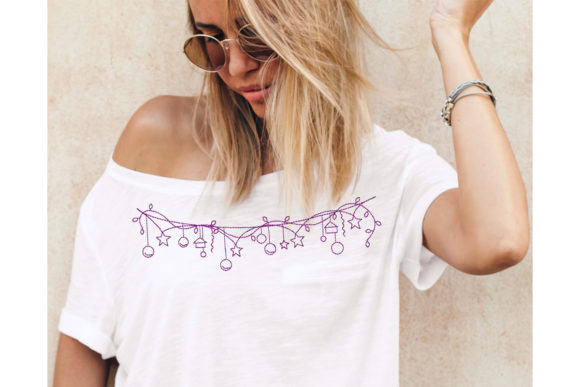
The initial glance at the Christmas Border suggests a versatile aesthetic that bridges the gap between traditional festive charm and modern minimalism. Unlike some overly busy holiday motifs that scream "novelty," this border feels decorative and refined. It carries a soft, festive energy that works equally well on a rustic farmhouse tea towel or a sleek, modern tote bag. For a handmade product line, this adaptability is crucial. Customers at weekend markets are often looking for items that feel special but can still integrate seamlessly into their existing home decor or wardrobe. The design avoids being too cute or too formal, hitting a sweet spot that appeals to a broad demographic of gift buyers.
Strategic Product Applications
The true test of any embroidery file is its performance across various substrates. Based on the description highlighting its suitability for clothing, accessories, and home decor, here is how I plan to deploy the Christmas Border in my booth:
- Tote Bags and Market Bags: This is likely the strongest contender for high-volume sales. Placing the border along the bottom hem or across the top opening of a canvas tote creates an instant tote bag design that looks professional. The linear nature of a border draws the eye horizontally, making the bag look wider and more substantial.
- Apron Embroidery and Tea Towels: Kitchen textiles are holiday staples. Applying this as tea towel embroidery along the lower third of the fabric adds a finished, high-end look compared to a central motif. Similarly, apron embroidery using this border along the waistband or pocket edge elevates a simple cotton apron into a giftable item.
- Patches and Pouches: For smaller ticket items, stitching this onto twill to create an embroided patch allows customers to add a festive touch to jackets they already own. On small fabric pouches, the border can frame the opening, acting as a decorative zipper guard.
- Pillow Covers: Home decor shoppers love seasonal updates. A border running along the edge of a pillow cover offers a subtle nod to the season without overwhelming the room, perfect for customers who prefer understated elegance.
Production Practicality and Batch Efficiency
For a small shop product lineup, efficiency is key. One of the standout features of the Christmas Border is its potential for batch production. Because borders are typically linear, they are often easier to hoop repeatedly than large, complex centerpieces. If the design fits within a standard hoop, I can set up an assembly line for my commercial embroidery machine, churning out dozens of towels or bags with minimal downtime between cycles.
Furthermore, the design's clarity is a major selling point. In a busy craft fair environment, customers make split-second decisions. A design that is easy to understand at a glance performs better than one that requires explanation. The Christmas Border offers immediate visual recognition of the holiday theme, stopping browsers in their tracks. When photographing these items for Etsy listings or creating a printable mockup for social media, the clean lines of a border tend to photograph exceptionally well, providing strong contrast against solid fabric backgrounds.
Critical Considerations for Execution
While the potential is high, a professional review must address the technical challenges. Not every fabric plays nice with every digital embroidery file. Here are the careful-use notes I am keeping in mind before mass production:
- Fabric Texture and Density: If the stitch density is high, waffle-weave towels or thick textured fabrics might cause the design to sink or lose definition. I will need to test on scrap fabric first to ensure the stitches sit on top of the texture rather than disappearing into it.
- Thread Contrast: The impact of a border relies heavily on thread colors contrasting effectively with the base material. On dark fabrics, I may need to adjust underlay settings or choose brighter thread shades to ensure the design pops.
- Curved Surfaces: Applying a linear border to a curved cap surface requires careful hooping and possibly a specialized cap frame to prevent distortion. Without proper stabilization, the ends of the border could pull or pucker.
- Scaling Issues: If I decide to shrink the design for small pouches or patches, I must verify that tiny details do not merge together. Designs that look crisp at 5 inches can become a muddy mess at 2 inches.
Enhancing Brand Value and Customer Engagement
Ultimately, the Christmas Border is more than just a pattern; it is a tool for building brand consistency. By using this design across multiple categories—towels, bags, and apparel—I create a cohesive booth display that signals professionalism. When customers see a unified theme executed with high-quality finished product standards, their perceived value of the items increases. This allows for healthier profit margins compared to selling generic, unbranded goods.
The visual appeal of a well-executed border also encourages buyer engagement. It invites customers to imagine the product in their own homes, sparking that essential emotional connection required for a sale. Whether used as a focal point or a subtle accent, the right application of this design can turn a simple piece of fabric into a cherished holiday tradition.
Final Designer Notes for Implementation
Before committing to a full production run, I strongly advise fellow makers to follow a strict testing protocol. Always test the design on the actual fabric texture you intend to sell. Check your hoop size limitations to ensure the full border fits without re-hooping, which can lead to alignment errors. Select the appropriate stabilizer—cut-away for stretchy knits and tear-away for stable wovens—to guarantee longevity. Finally, compare the design on various fabric colors to find the most striking combinations.
It is also vital to confirm commercial licensing terms. While the description suggests suitability for various projects, always verify if the design assets include the right to sell physical finished goods. Since specific details like exact stitch count or file formats were not provided in the brief description, please check the product listing thoroughly before purchasing. With the right preparation and strategic placement, the Christmas Border is poised to be a top performer in your holiday Borders and Embroidery collection.